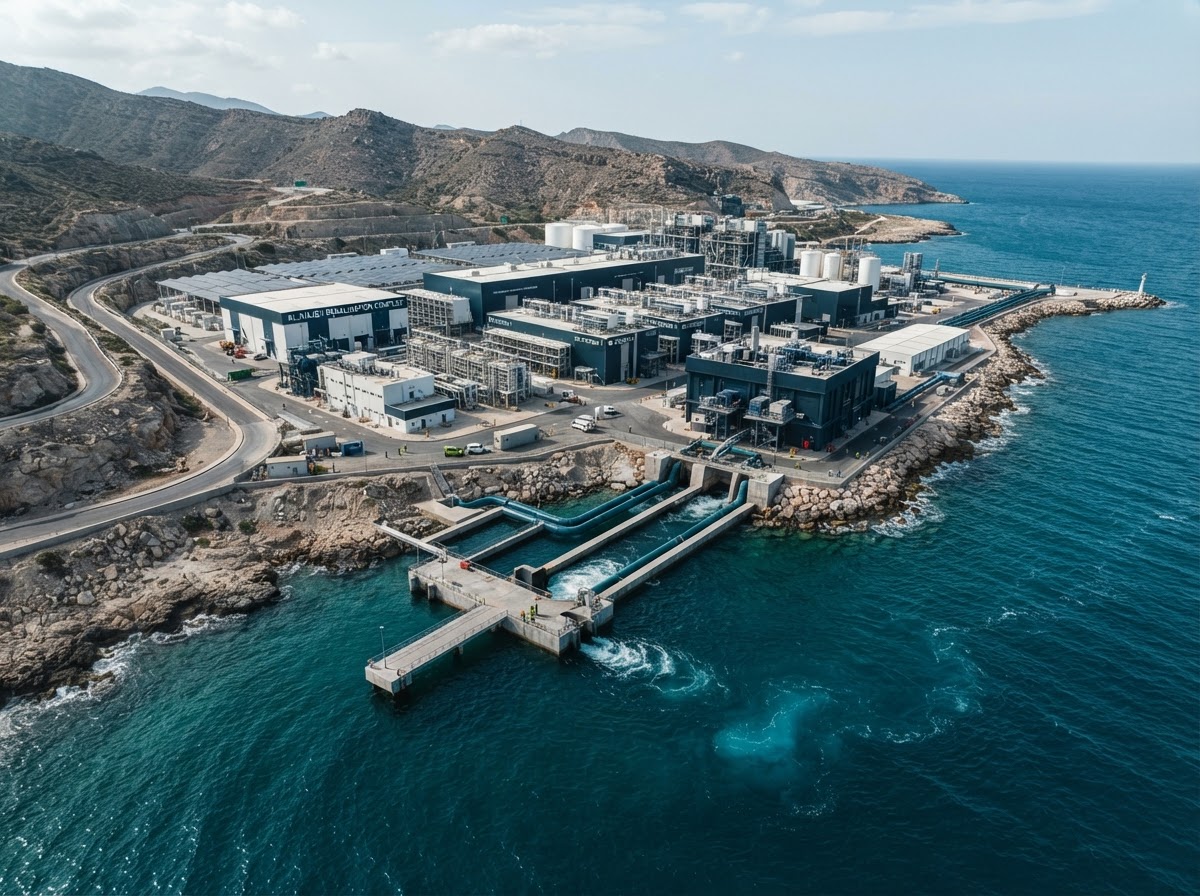
Coastal desalination plant
Solutions & Ideas

The toolkit that solves the water problem.

Eight strategies already working across America. None is a silver bullet — together they close the supply gap and build resilience for the next drought.

Desalination

Supply

Turning seawater and brackish groundwater into fresh supply — essential for coastal and arid states with limited surface water.

  • Reverse osmosis plants can now produce water at ~$0.50–2.00 / m³
  • Brackish groundwater desalination is viable inland (TX, NM)
  • Brine disposal must be managed to protect marine ecosystems
  • Pair with renewable energy to cut operating cost and emissions
Impact

Can add 5–15% to coastal city supply portfolios.

Water Reuse & Recycling

Supply

Treating wastewater to drinking-water standards — 'toilet to tap' done right — is the fastest, cheapest new source.

  • Indirect potable reuse via groundwater recharge (OCWD, TX ASR)
  • Direct potable reuse now permitted in CA, TX, AZ
  • Purple-pipe reclaimed water for irrigation and industry
  • Closes the urban water loop, drought-proofing supply
Impact

Can recover 60–80% of urban wastewater as new supply.

Stormwater Capture

Storage

Capturing rainfall that would otherwise flood streets and run to the ocean, then banking it underground.

  • Spreading basins and infiltration galleries recharge aquifers
  • Green infrastructure: permeable pavement, bioswales, rain gardens
  • Captures 'lost' atmospheric-river water in California
  • Reduces flood risk while building drought reserves
Impact

LA County aims to capture 300,000+ acre-feet/year by 2040.

Conservation & Efficiency

Demand

The cheapest gallon of water is the one you never use. Conservation buys time for every other solution.

  • Turf removal and xeriscaping (Las Vegas cut use 47%)
  • High-efficiency fixtures and leak detection
  • Tiered pricing that rewards low use
  • Drip irrigation and deficit agriculture
Impact

Can cut urban per-capita use 30–50%.

Aquifer Storage & Recovery

Storage

Injecting treated water underground during wet years, withdrawing it during drought — a natural reservoir.

  • Avoids evaporation losses of surface reservoirs
  • Texas, Florida, and Arizona lead in ASR wells
  • Stores stormwater, reclaimed water, or surplus surface water
  • Buffers climate whiplash between flood and drought
Impact

Can store millions of acre-feet without building dams.

Agricultural Technology

Demand

Agriculture uses ~80% of consumed water in the West. Precision irrigation frees enormous supply.

  • Soil-moisture sensors and satellite-guided irrigation
  • Laser-leveled fields and drip conversion
  • Drought-tolerant crop varieties
  • Water trading from low-value to high-value crops
Impact

A 10% ag efficiency gain = more than all urban use.

Cloud Seeding

Supply

Seeding winter clouds with silver iodide to boost snowpack in mountain watersheds.

  • Adds ~5–15% to targeted snowpack in suitable storms
  • Used by CO, UT, WY, CA, NV utilities
  • Low cost per acre-foot compared to new dams
  • Best as a supplement, not a primary strategy
Impact

A low-cost marginal boost to existing reservoirs.

Nature-Based Watershed Restoration

Storage

Healthy forests, meadows, and wetlands act as sponges — storing water and releasing it slowly.

  • Forest thinning improves snowpack retention and runoff timing
  • Beaver-dam analogs restore meadow hydrology
  • Wetland restoration filters water and recharges groundwater
  • Reduces wildfire severity that destroys watersheds
Impact

Improves both water quality and yield over decades.